
National Frameworks For Climate Services Course
الخطوط العريضة للقسم
-
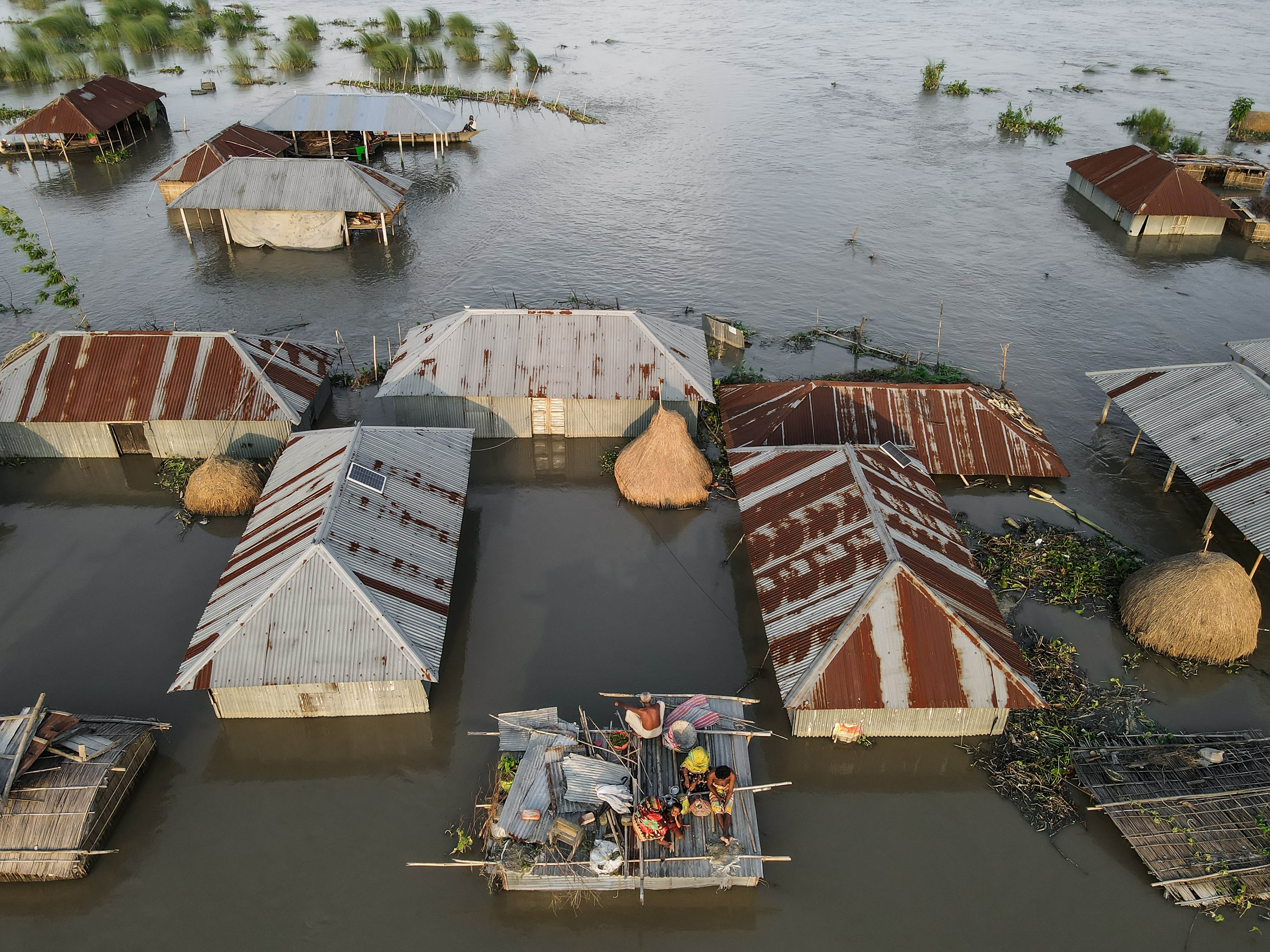
Welcome to the self-paced online course on National Frameworks for Climate Services (NFCS)
This course provides an introduction to the concepts, principles, processes, and practical considerations involved in developing and implementing a National Framework for Climate Services. It explores how countries can strengthen coordination among climate service providers and users to ensure that climate information and services respond effectively to national needs.
The course consists of five interactive modules, which cover key aspects of NFCS development and implementation, including institutional coordination, stakeholder engagement, planning, implementation, monitoring, and lessons learned from existing NFCS experiences.
Course Objectives
By the end of this course, participants will be able to:
- Explain the purpose and key principles of a National Framework for Climate Services;
- Describe the main steps and processes involved in developing and implementing an NFCS;
- Identify the roles of key institutions, stakeholders, and users in strengthening climate services;
- Recognize approaches for coordination, stakeholder engagement, implementation, and monitoring; and
- Draw on existing NFCS experiences and lessons learned to support national climate service development.
Who is this course for?
This course is intended for professionals and stakeholders involved in climate services, including representatives of National Meteorological and Hydrological Services (NMHSs), government institutions, research and academic organizations, development partners, and other organizations involved in the production, communication, and use of climate information and services.
The course is self-paced and takes approximately 3 hours to complete. The modules are designed to be followed in sequence, with each module building on the previous one.
Ready to get started?
For information on how to enrol, take the course, and obtain your WMO-certified badge, please see:
How to enrol, take the course and get a badge – Instructions
We hope you enjoy the course and find it useful in supporting the development of effective, coordinated, and user-driven climate services.
-
-
ينبغي للطلبةمعاينة
In this module, you will be introduced to the National Frameworks for Climate Services course, including its purpose, structure, and expected learning outcomes. The lesson explains why NFCSs are important for strengthening the coordination, delivery, and use of climate services at the national level. It also provides the broader context of climate services, including links with global, regional, and national frameworks, and prepares learners for the key concepts and practical topics covered in the course.

Click to open Module 1. When you are finished with the module, return here to start Module 2.
-
-
-
ينبغي للطلبةمعاينة
In this module, you will learn what National Frameworks for Climate Services are and why they are important for strengthening climate services at the national level. The lesson explains the purpose and value of NFCSs, the need for national coordination, and how climate services support decision-making in climate-sensitive sectors. By understanding NFCSs, learners will gain insight into how institutions, stakeholders, and users can work together to make climate information more accessible, useful, and actionable.

Click to open Module 2. When you are finished with the module, return here to take the quiz.
-
Module 2 Quiz إختبار
A score of 70% is required to pass this quiz. You may make as many attempts as you wish. Only your highest score will be counted. Passing the required quizzes is part of the course completion requirements.
Note that you must be enroled and logged into this site to access the quizzes. Instructions on how to enrol are provided under “Course Enrolment Instructions” at the top of this page.
-
-
-
ينبغي للطلبةمعاينة
In this module, you will learn about the key steps involved in designing a National Framework for Climate Services. The lesson introduces the NFCS lifecycle and focuses on readiness, baseline assessment, stakeholder mapping, and national consultation. By completing this lesson, learners will understand how evidence-based planning, inclusive engagement, and coordinated dialogue help establish a strong foundation for developing an effective NFCS.

Click to open Module 3. When you are finished with the module, return here to take the quiz.
-
Module 3 Quiz إختبار
A score of 70% is required to pass this quiz. You may make as many attempts as you wish. Only your highest score will be counted. Passing the required quizzes is part of the course completion requirements.
Note that you must be enroled and logged into this site to access the quizzes. Instructions on how to enrol are provided under “Course Enrolment Instructions” at the top of this page.
-
-
-
ينبغي للطلبةمعاينة
In this module, you will learn how a National Framework for Climate Services can be implemented in practice. The lesson explains how to develop an NFCS Action Plan, define priorities, clarify roles and responsibilities, plan timelines and resources, and support coordination across institutions and sectors. By completing this lesson, learners will understand how planning, endorsement, funding, institutional workflows, alignment with national strategies, and monitoring can help move an NFCS from design to effective operation.

Click to open Module 4. When you are finished with the module, return here to take the quiz.
-
Module 4 Quiz إختبار
A score of 70% is required to pass this quiz. You may make as many attempts as you wish. Only your highest score will be counted. Passing the required quizzes is part of the course completion requirements.
Note that you must be enroled and logged into this site to access the quizzes. Instructions on how to enrol are provided under “Course Enrolment Instructions” at the top of this page.
-
-
-
ينبغي للطلبةمعاينة
In this module, you will explore lessons learned from existing National Frameworks for Climate Services. The lesson highlights common challenges, enabling factors, practical solutions, and approaches for sustaining NFCSs over time. By completing this lesson, learners will understand how NFCSs can evolve, mature, and remain responsive to national needs through institutional learning, regional coordination, peer exchange, and continuous improvement.

Click to open Module 5. When you are finished with the module, return here to take the quiz.
-
Module 5 Quiz إختبار
A score of 70% is required to pass this quiz. You may make as many attempts as you wish. Only your highest score will be counted. Passing the required quizzes is part of the course completion requirements.
Note that you must be enroled and logged into this site to access the quizzes. Instructions on how to enrol are provided under “Course Enrolment Instructions” at the top of this page.
-
-
The course developers would love to hear about your experience using this learning resource. To provide feedback, please submit the feedback form available below. Note that you will only see the link to the feedback form if you have enrolled to attend the course and are logged in the ETRP Moodle Site. Your feedback will be considered when the course is updated.
Please note that submission of this feedback is required to obtain a course completion certificate.
For other questions and comments, or to report problems in this course page, please contact: nmsemo@wmo.int
-
A score of 70% is required to pass this exam. You may make as many attempts as you wish. Only your highest score will be counted. Passing this exam is required to obtain credit for course completion.
Note that you must be enroled and logged into this site to access the quizzes. Instructions on how to enrol are to be found under "How to take this course" at the top of this page.
-
This certificate will be available after you have successfully completed all required course activities. To receive the certificate, you must complete all five NFCS modules, pass the Final NFCS Course Exam with the required score, and submit the NFCS Course Feedback form.
Once these requirements are completed, you will be able to access and download your certificate of completion. This is a system-generated digital certificate issued through the WMO ETRP Moodle platform. No handwritten signature is required.